Piercing Aftercare
Don't Forget the Ljaze guarantee
Congratulations! You have just received a body piercing from a skilled and knowledgeable professional who cleaned and disinfected the area to be pierced, used sterile instruments, sterile high-quality jewellery, and a single-use, disposable needle.
NOW IT IS UP TO YOU TO TAKE PROPER CARE OF YOUR PIERCING DURING THE CRUCIAL HEALING PERIOD. HOW YOUR PIERCING HEALS IS UP TO YOU AND YOUR BODY.
WHAT IS NORMAL? Initially, some bleeding, localised swelling, tenderness, or bruising during healing is normal. Some discolouration, itching, and secretion of a whitish-yellow fluid — not pus — that will form a crust on the jewellery can occur. The tissue may tighten around the jewellery as it heals.
A piercing may seem healed before healing is complete. This is because piercings heal from the outside in, and although it feels healed, the tissue remains fragile on the inside. BE PATIENT, and keep cleaning throughout the entire healing period. Cleaning should be done at least twice daily, more often for certain piercings.
HINTS & TIPS...
- Unless there is a problem with the size or shape of the initial jewellery, or you have been told by your piercer then leave it in place, for the entire healing period. Only a qualified body piercer should perform any changes during the healing period.
- Leave jewellery in at all times, even old well healed piercings can shrink and close in minutes after having been there for years, if removed re-insertion can be difficult or if not impossible,
- REGULARLY with clean hands be sure to check the threaded ends of your jewellery for tightness, Remember “RIGHTY-TIGHTY-LEFTY-LOOSEY”
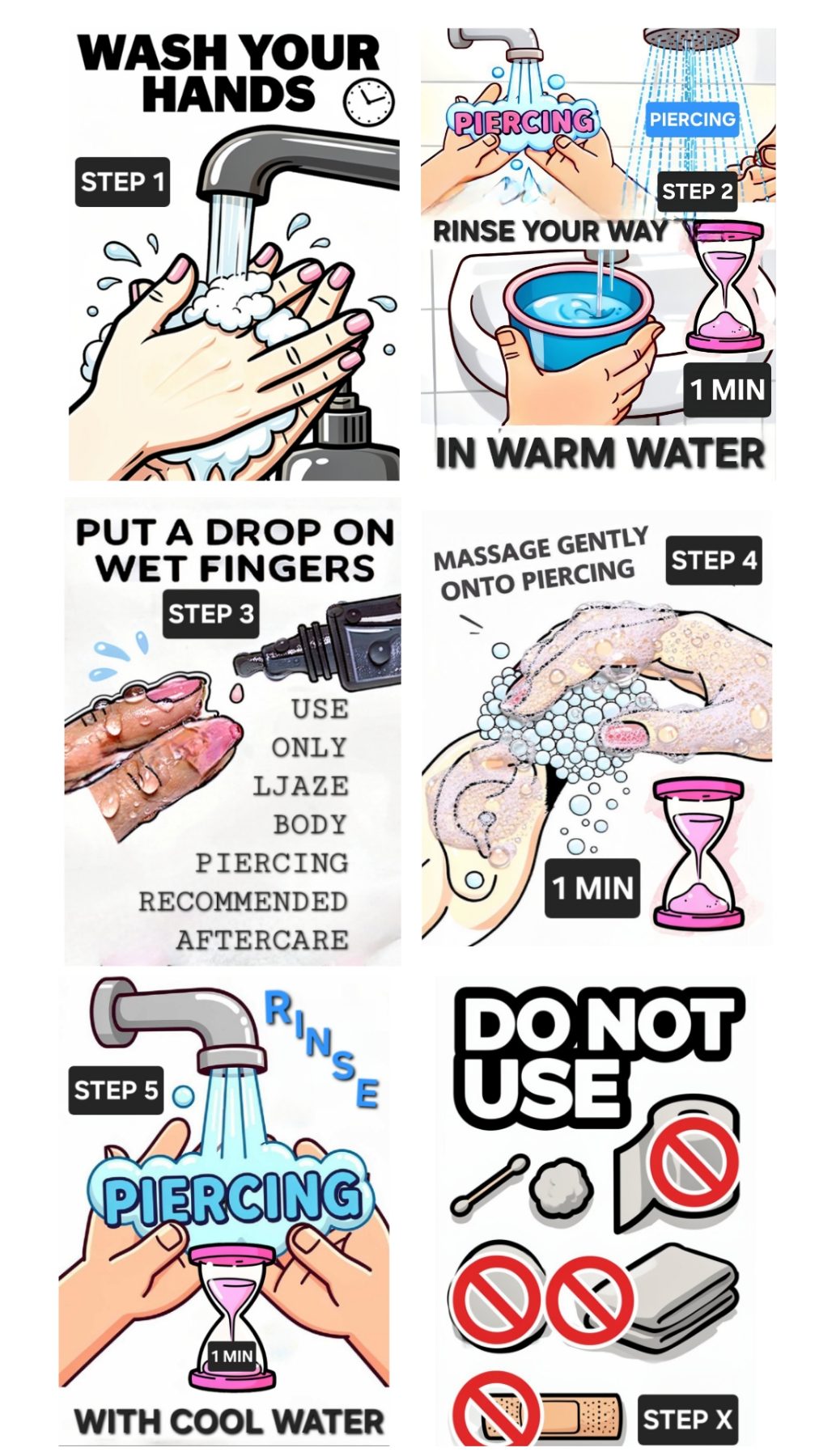
Remember the Ljaze guarantee get in touch asap if you have any concerns
🚩 Red flags: Contact us or your GP if you notice:
• Green/yellow thick discharge with a bad smell • Hot, throbbing pain that gets worse after 3–4 days • Red streaks spreading from the piercing • Fever or feeling unwell.
💚 Normal: redness, swelling, clear/whitish fluid, itching, mild bleeding, crusting
This is not medical advice. If you are concerned, contact your GP.